Thursday, March 29, 2012

In like a lion, out like a lamb?

I can't remember when the weather in March came in like a lion and went out like a lamb. It sure hasn't been that way the past few years. We had a fierce, lion like, storm just a couple days ago and another one is on the horizon.

This saying comes from an English proverb that describes typical March weather as:
"March comes in like a lion and goes out like a lamb."
In Wales this proverb is applied to the month of April more often than March, especially in the borders.


In the 19th century it was used as a prediction contingent on a year's early March weather:
"If March comes in like a lion, it will go out like a lamb."

I'm not sure what weather is coming in April but I'm longing for more days of warm springtime sun and new flowers.


Tuesday, March 27, 2012

Sweet Matriarch

The matriarch of the hen house died last night. She went peacefully in her sleep. She must have known it was time as she fell asleep in a nest box instead of up on the perch. We were lucky enough to say goodnight to her at about midnight. She was a sweet old gal but she wasn't too fond of being photographed.

Sunday, March 25, 2012

Montagues and Capulets


The atmosphere around the yard has turned icy recently. Not due to the dipping temperatures, but the feud that has come about between the cocks. Gone are the days of letting the chickens out to free range all day as the farm yard has become a war zone. Recently the chicken rooster and the guinea hen cock have been at odds. I'm not sure what started the feud but it may be as simple as testosterone. Each of the boys are in their early twenties in fowl years I think, being they are about eight months old. Perhaps they are just sparing and if I were to let them get their fill then one would be the victor and peace would again be achieved. I'm afraid to try that though. Their fights are harsh and bloody. The chicken rooster sustaining most of the damage. Due in part to the large rose comb that covers his head like a permanent kepi.

The guinea cock has a horn that works well as a shield but he does have wattles that are fleshy and fragile.


 The guinea cock also has the two keets who act as offensive tackles flanking the guinea cock. They have an invisible line of scrimmage and take on the chicken rooster as if its fourth and ten with a goal in sight.


For the most part the chicken hens do not engage in battle. They stand at the sideline, watching the war, like paralyzed cheerleaders. For now the concept of free ranging involves herding the guineas into an enclosure and letting the chickens out for a few hours. I do wish they would all just get along.

Tuesday, March 20, 2012

The Price of Tuition


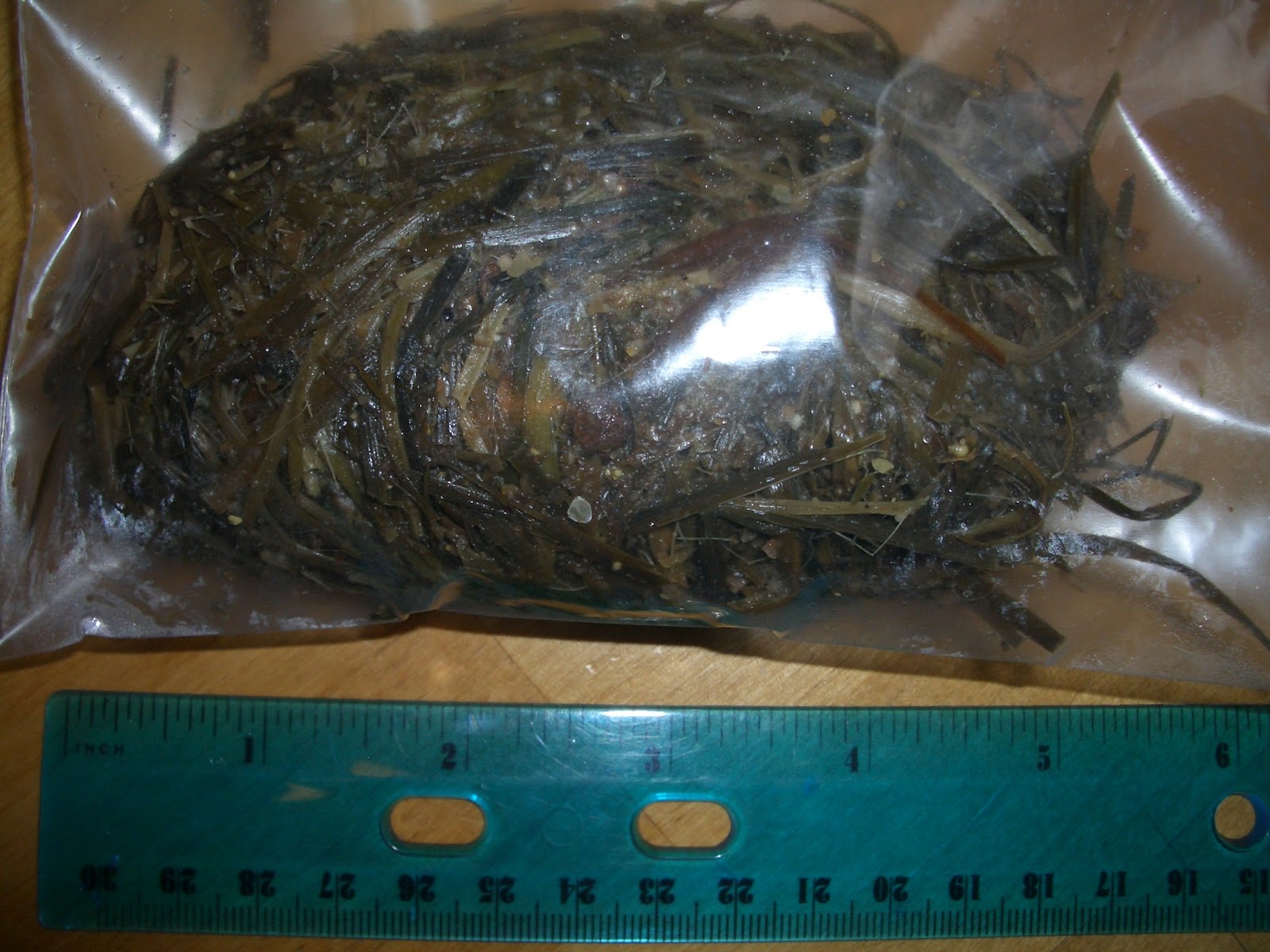
Every now and then I learn things the hard way. This week the price of my tuition almost cost the life of one of our beloved hens. I thought I was being a good farmer by applying practical, even enterprising, uses for the hay the goats were wasting. I happily tossed it to the chickens. They seemed overjoyed at their bounty and reduced it to nearly nothing in a matter of hours. All seemed right in our little world. Then we woke up to find one of the hens acting strangely. She was doing this head and neck bobbing thing. Much like you would expect from a Lady Gaga performance only the hen didn't have much of a rhythm to her movements. As she moved, her throat gyrated back and forth in a pendulous shimmy. It was as if she had trapped a liter of water in her throat. My daughter who spends all her free time learning everything she can about poultry said, “Mom, I think she has sour crop”. She then proceeded to explain to me that sour crop is a condition that happens when a chicken's crop becomes impacted by something that the chicken has ingested and it becomes lodged in the crop. A chicken's crop is an organ in a birds digestive system that is between the esophagus and the stomach and acts as a storage area for food. If a chicken eats something that becomes impacted in the crop and the chicken is unable to pass the impaction then the chicken will eventually starve to death. Sure enough as we began to palpate the hen's throat area we could feel a very large mass. It was easy to manipulate but ultimately it was still a mass. I was almost certain all the wonderful hay I'd been joyfully tossing into the chicken coop was now causing our problem. We have a wonderful veterinary hospital that sees all types of animals, even chickens. They were able to get us right in and it was determined that our hen needed surgery or she was not long for this world. She was already very thin and I cringe to think of how long she had the impaction before we noticed. We spend a lot of time with all of our animals everyday. We hold them and talk to them. They are our family. Why hadn't we seen this large bulge days earlier? Why did we miss the signs of this hen loosing weight? It was a long day as we waited by the phone praying for the Lord's will to be the same as ours and that our hen would be back home safe and sound again. When the call came that Speckles had made it through the surgery just fine and that we could pick her up we were so relieved.

This is the mass of Timothy grass hay that was lodged in the crop of the hen, it measures:  5” x 3” x 2”.


This is a photo of her incision. It is about three inches long. She has dissolvable sutures. Her feathers cover up the incision to protect it from the other hens once she is able to be with them again.


Our little hen is doing well. She has her own personal chef now and she gets to have really neat food like: rice, yogurt, cottage cheese, oatmeal, and even scrambled eggs, every hour.


She has decided that bananas are gross but crumbled-up bread is wonderful. She also gets to live in the house for the next couple weeks.

                                      Speckles checking out her new digs.

Hopefully the other hens will be nice about letting her back into the flock. I will keep you posted when we re-introduce them.

Update 3/21/12:   The price of tuition just became too high. Yesterday I cleaned out all the remaining hay from the coop, but apparently another hen of ours ingested too much grass hay before I realized that I had caused this dangerous situation. She did not make it through surgery even though our veterinarian tried extremely hard to save her. We are blessed that we have not had more hens with a problem. I have learned a very valuable and sad lesson.

Sunday, March 18, 2012

Meet the California Slender Salamander


Not only are we so blessed to live with the wonderful little newts but an even tinier amphibian lives here too and every now and then they come out to say "Hello". Meet the California Slender Salamander. They reside primarily within California, hence the name. However, although they were originally considered endemic to California their specie are actually comprised of twenty separate species that have been found along the extreme southwestern Oregon coastline and as far south as northern Mexico. They are considered to be the most common salamander in California but I've lived here almost half a century and this is the first time I've ever met any. Perhaps they are very shy or I was unobservant until now.

 These little amphibians are not specifically protected in California yet, although it has been proposed. Despite this in Oregon, it is ... and I quote, “Illegal to hunt, trap, pursue, kill, take, catch, angle for, or have in possession, either dead or alive, whole or in part, a California Slender Salamander”.  So there you have it, we have committed an illegal act by Oregon law as we have pursued (well they don't really move very quickly) and caught these little guys to photograph them. Yikes! I guess it is a good thing we aren't living in Oregon at the moment.


We didn't hurt them I promise. We put them right back where we first made their acquaintance.


Thursday, March 15, 2012

Egg Farts :-/


Every now and then a chicken will lay a super tiny egg. First time layers typically lay small eggs until their egg laying mechanisms are fully ready for the laying process. However, mature hens will sometimes lay tiny eggs commonly called: wind eggs, dwarf eggs, fart eggs, or even cock eggs. It was once believed that these tiny eggs came from roosters and if the egg were to hatch then it would produce a Basilisk. These eggs are infertile. Sometimes they contain yolks but most often they do not. There is nothing to be alarmed about if you find one of these tiny eggs in your nest box someday. The mini egg is simply a tiny piece of reproductive tissue that has broken away from the ovary before entering the oviduct. The hen's body is then stimulated to treat that tiny bit of tissue like that of normal reproductive tissue and wrap it in albumen, membranes, and shell. The tiny egg then continues down the egg tube (oviduct) just like a regular egg. It is fun to ponder the thoughts the hen must have had when she laid that tiny egg. Perhaps she just wanted to celebrate Easter early and deliver her own jelly beans or maybe she has seen, Harry Potter and the Chamber of Secrets, one too many times.

Clockwise from left: standard Polish egg, Old English Game bantam egg, Fart egg, dime

So cute and tiny!

Tuesday, March 13, 2012

It's Raining Newts!

We are so lucky to live right on a section of Copsey Creek and with it comes a bounty of amazing wildlife. Like the California Newt, known to some as the "orange bellied newt".


These little creatures nestle under debris found along the creek but when the rains come they go on "walk about" and that often includes all the area surrounding our house. They can be found during the day but tend to be more nocturnal. Sometimes they venture out in nice weather too and it is not unusual to find them wandering down the front path in search of their favorite food, slugs.


We don't ever go outside at night without a flashlight, even during a full moon, as we could potentially step on a newt. Some are easily visible as they can reach sizes up to eight inches in length. However, it is not unusual for us to find babies that are only about an inch long. When the rains come we scour the driveway before anyone moves a vehicle as we would be devastated if we were to squish one of these little guys.


It is important that you wash your hands after handling newts as their skin has a neurotoxin that is a hundred times more toxic than cyanide. The neurotoxin is only dangerous if consumed but it would be a bummer to forget to wash your hands and then go about eating a sandwich or something.